How to Choose a Public Relations (PR) Agency
- By mayson.jefferson
- •
- 15 Apr, 2016
- •
This is a subtitle for your new post

The people who manage your communications are just as critical as the communications themselves. Whether it's staff within your company or an outside agency, their work will influence your organization's reputation and overall success. When you're searching for an agency with the right fit, it can be like finding a needle in a haystack. But there are steps you can take to make the process easier.
If you own a business and would like to benefit from PR services, you have two options. You
can either create a PR department and employ PR staff or hire outside PR services. The first
option is without a doubt a better idea because the entire PR department is working for you
alone.
But, if you decide to choose an agency, it’s important that this agency does its homework on
your target market, but it’s equally important that you do yours. When searching for agencies
to tender for your business, select your favorites so that you have no more than three agencies who formally pitch. Not only will the agencies thank you for it, but they’ll also
invest more time in a sensible proposal. Too many agencies pitching sends a red flag that the
pitch isn’t worth the time and effort because the process isn’t being taken seriously enough.
You will probably benefit from hiring a firm that has experience in your area of business. Ask to see results from past campaigns with clients in your industry. Although the more
experienced the PR personnel the better, the established PR specialists are typically also
considerably more expensive than those at the entry-level who are not necessarily any less
effective than their experienced colleagues. In order to prove themselves and create a good
reputation, they often work twice as hard as their famous counterparts and as a result, they
often bring excellent results. Hiring non-established PR specialist can be a risk which is why you should ask yourself if you are willing to take the chance, or better yet if you can afford to take the chance.
If they are successful, they will be representing you with the media and beyond so you need
to ensure that you have chosen a partner who understands the dynamics of your company and
the potential politics involved. If understand what products and services you sell. This is
fundamental and there is no excuse for a PR agency not being able to understand this. These
are relatively simple facts to discover and if the PR agency is worth its weight, it should have been able to find the answers to these simple questions via basic level research or by simply phoning you and discussing it outright.
Furthermore, it is important be sure you like the team you are hiring. Of course it is primary that they are qualified and will do a great job, but it’s equally important that you like them and want to work with them. It’s really no different than hiring people to your own internal team, you want to be excited to work with them everyday. Some people hire a publicist and expect their workload to be lightened. But you'll need to be involved in your own PR, whether by tweeting, blogging or being available to speak with media on demand.
In the end, once you have chosen your agency it is important trust their instincts. You’ll get far more from them if you listen to their advice and proposal for your campaign. If there is no trust ,why did you hire them?
Source: PR Agency Tampa, Mashable

Web design is a relatively new industry, having been created with the advent of the internet, and is gaining popularity in particular over the last ten years, as digital media has become a major part of many people’s lives. Most people rely on the web for their communications, information, shopping, social life and more. The demand for web designers has been growing rapidly and the industry is currently considered a good one with relation to job prospects and future growth.
The term web developer is sometimes used interchangeably with web designer, but this can be confusing. Web developing is a more specialist role, focusing on the back-end development of a website and will incorporate, among other things, the creation of highly complex search functions.
The recent growth in touchscreen phones and tablet devices has dictated a new way of designing websites, with the web designer needing to ensure that web pages are responsive no matter what type of device a viewer is using. Therefore the need to test websites at different stages of design, on a variety of different devices, has become an important aspect of the job.
Apart from having technical skills, they should have an eye for clean and artful design, possess superior user interface design skills and be able to translate high-level requirements into interaction flows and artifacts, and transform them into beautiful, intuitive, and functional designs.
Responsibilities
Execute all visual design stages from concept to final hand-off to engineering
Conceptualize original ideas that bring simplicity and user friendliness to complex design roadblocks
Create wireframes, storyboards, user flows, process flows and site maps to effectively communicate interaction and design ideas
Present and defend designs and key milestone deliverables to peers and executive level stakeholders
Establish and promote design guidelines, best practices and standards
Web Designer Requirements
According to O*Net Online in 2010, 43% of web developers held a bachelor’s degree, 27% had some college but no degree and 20% had an associate’s degree ( www.onetonline.org). Web designers need education in computer technology and website design to be competitive in the job market.
An associate’s degree program related to web design, such as an Associate of Applied Science in Web Graphic Design, provides a student with a foundation in the design and technical aspects of creating a website. Students learn web design skills and build professional portfolios that highlight their skills and abilities. Common topics include:
Fundamentals of design imaging
Basic web design
Animation
Multimedia design
Content management
Editing for video and audio
Multimedia programming and technology
A bachelor’s degree program in multimedia or web design allows students to learn advanced skills needed for professional web design. Students develop artistic and creative abilities in addition to technical skills. Degree programs, such as a Bachelor of Science in Web Design and Interactive Media, cover:
Databases
Webpage scripting
Programming
Digital imaging
Multimedia design
Web development
What to expect
Web designers are essentially office based. Travel to client sites may be required especially when working on a large and complex project, and they may be based there for the duration of the project. Self-employed and freelance web designers will often work from home but may work in their client’s offices from time to time.
The top location for web design jobs is London, with the south east of England also providing a good number of jobs. Other hot spots include Manchester, Leeds, Glasgow and the M4 corridor around Slough and Reading.
This profession is currently male-dominated, but steps are being taken to redress the balance. For information and jobs for women who want to work in technology, go to Women in Technology.
Depending upon the employer, the dress code can be informal, for example jeans and a t-shirt. When meeting clients it may be necessary to wear more business-like attire.
Source: WebDesign Indinapolis

Source: PR services Tampa fl

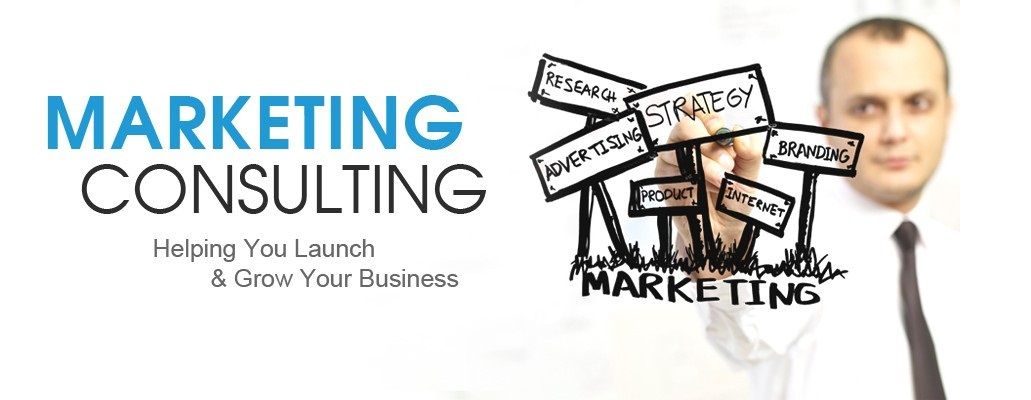
The title “marketing consultant” sounds highly paid and professional, but people often have no real idea what a marketing consultant does. What role does a marketing consultant play in an organization? How does a marketing consultant help a company?
They work directly with other company marketers to help identify target market segments, find ways to market to those segments, and help implement those strategies.
Marketing consultants provide companies with risk assessments of various marketing scenarios, and allow company directors to choose from various strategies with input from the consultant. They may also provide training or workshops for current marketing teams, informing them of new or better strategies. The job description of a marketing consultant usually varies heavily on a case-by-case basis. They can work in marketing or pr agency.
A marketing consultant works with companies to create and implement marketing strategies. These strategies are centered on the core of the business and what services and products they offer. A consultant helps create a detailed marketing plan, determine the marketing message, and identify the appropriate marketing mix to get the message out. They will then follow the plan through, and work to execute and implement the marketing strategy. They will monitor results, tweak as necessary and ensure that the companies gets the best results from their marketing efforts.
A marketing consultant will be skilled and knowledgeable in consumer behavior and marketing process. This includes having the ability to identify the companies target market and position their product or service offering in a way that will interest consumers and make them want to buy.
As an independent thinker and an independent consulting practice, you will always need to assert your individualism. Let your independence ring out with forward-thinking insight and forward-thinking business practices. Realize that for projects you want, it is your independence that will win the new client and the next project.
If you do decide to pursue a career as a marketing consultant, first you need to pick the right
school for you. These two are said to have the best marketing graduate programs:
1. Northwestern University in Evanston, IL
School Highlight: Faculty in the school of marketing are leading scholars in their field, including a past president of the Association of Consumer Research, an L.G. Levanted Professor of the Year, and a recipient of the Marketing Educator of the Year Award, presented by the American Marketing Association.
In 2016, Northwestern University's J.L. Kellogg School of Management was ranked the best graduate marketing school in the nation by U.S. News & World Report. Students in the Master of Business Administration (MBA) program can study marketing or marketing management. Although the programs are similar, the marketing track teaches general marketing skills and concepts, while the marketing management track is designed for students interested in
specific types of marketing or advertising careers. The MBA program can be completed in
one year of full-time study or two years of part-time study. The Kellogg School of Management also offers a Ph.D. in Marketing.
2. Stanford University in Stanford, CA
School Highlight: Stanford offers a Quantitative Marketing track within their Ph.D. program by collaborating with the Economics and Statistics Departments. Stanford University's graduate marketing program was ranked third in the county for 2016 by U.S. News & World Report. Full-time graduate students can complete the MBA in Marketing in two years. In-depth studies include topics in consumer and business marketing, as well as brand identity, analytics and consumer behavior. Experienced professionals may be interested in the MSx Program, formerly known as the Sloan Master's Program, a 12-month course of study for accepted 'Sloan Fellows'. For students looking to devote their careers to research, a Ph.D. program is available.

For better or worse, anyone can write a blog post about anything they want. Everyone has a voice and the best voices will rise to the top.
The writer can show their personality:
In blog posts, the writer has more leeway to add in their voice and personality than other types of writing.
Blogs are a great form of mass communication:
You can help people, learn new things, entertain your audience—the possibilities are endless and amazing. Blogging opens up all of these to a very wide audience.
You can make money:
Get the right blog going and you can make a lot of money through advertising and sponsored posts.
It allows people to craft better thoughts:
Instead of reading haphazard, uneducated Facebook statuses, it’s much better to see people’s thought process in a well-written blog post.
You can establish a community:
Blogging allows you to connect with other individuals who share the same interests. Sharing ideas and opinions within your community helps establish yourself as a thought leader.
Good for SEO:
Keeping content on your site fresh and relevant, you can use your blog to boost the search engine ranking (SEO) of your site and your business.
It brings people back to your site:
If your blog is strong enough and updated regularly, people will come back looking for more and bring traffic back to your site as well.
It’s free:
It costs you a grand total of zero dollars to post to the blog, so if you have something to say, there’s nothing to stop you.
You can establish yourself as a thought leader:
A blog is a great place for your original thoughts, and it can be a wonderful way to show off your individuality. If people like your ideas, you can become a thought leader in your industry!
What else do you love about blogs? Let me know!
